Surfing Near Lisbon: No Car Required
Lisbon might be the only European capital where you can be sitting in a lineup of clean Atlantic peaks within half an hour of leaving your apartment — by train, for the price of a coffee. The coastline arcing from the Tagus estuary up to Nazaré holds everything from mellow beginner beach breaks to the biggest waves ever surfed, and almost all of it is reachable by public transport.
This guide covers six spots, ordered roughly by distance from the city, with the exact trains, ferries, and buses to get you there. No rental car, no roof racks, no excuses.
Carcavelos: The 20-Minute Commute
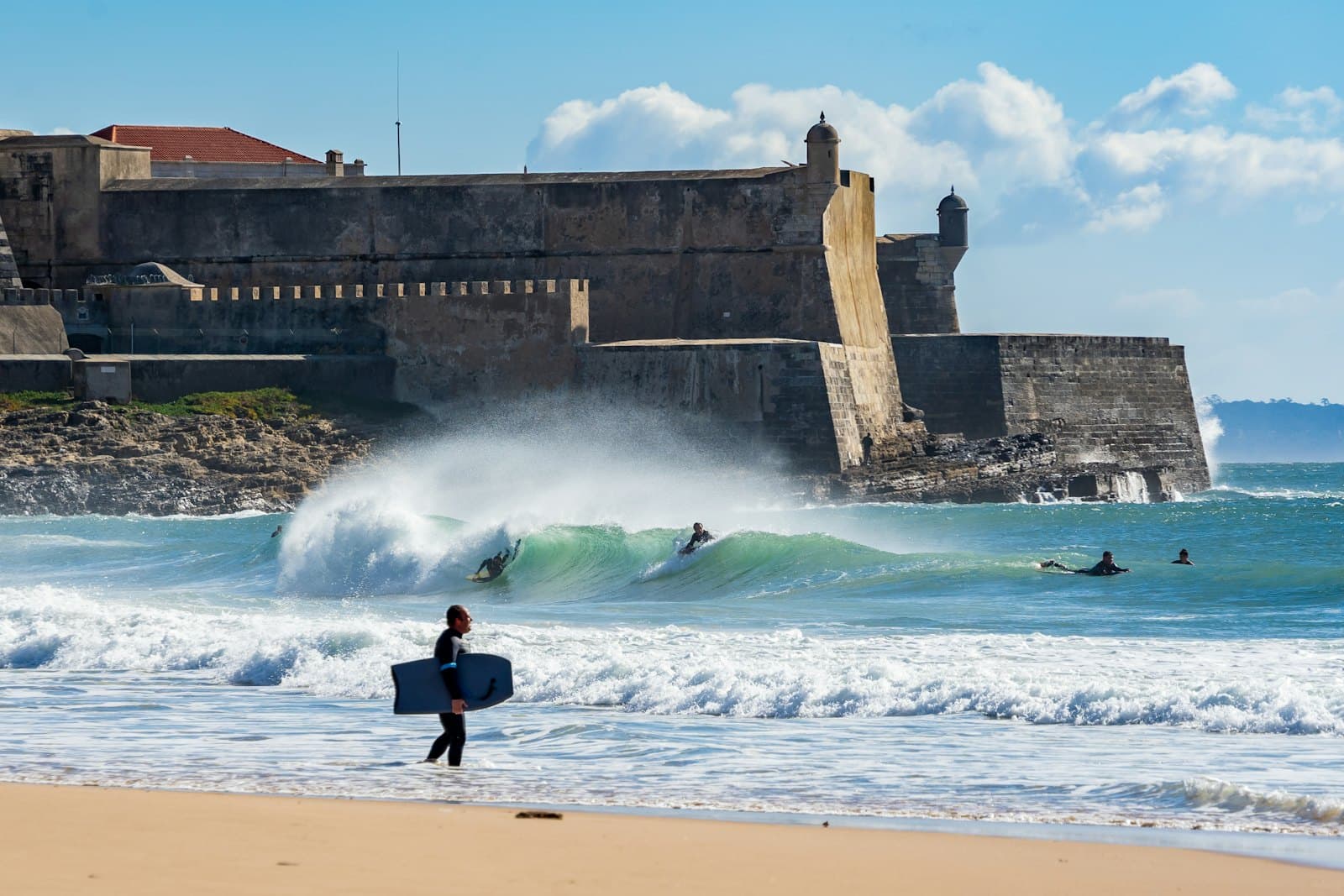
Carcavelos is Lisbon's home break. Hop on the Cascais-line train at Cais do Sodré and you're stepping off at the beach about 20 minutes later, for roughly €2. As Lapoint's guide to surfing in Lisbon notes, it works for all levels: a long sandy beach break beneath the São Julião fort with peaks spread wide enough that beginners, improvers, and shortboarders all find their corner. Surf schools and board-rental shacks line the sand, so you can show up with nothing but a towel.
The trade-off for convenience is company. Carcavelos gets busy, especially on weekend mornings and clean autumn swells. Go early on a weekday and it's a different beach.
Costa da Caparica: 30 Kilometers of Beach Breaks
Cross the river and the coastline opens up. Costa da Caparica, on the south bank of the Tagus, offers around 30 km of uninterrupted beach breaks — enough space that even in summer you can walk until you find an empty peak. Getting there without a car is easy and costs about €2.60: take the ferry from Cais do Sodré to Cacilhas, then the bus straight to the beach town.
Like Carcavelos, Caparica suits all levels. The northern beaches near town are the most accessible and have the densest cluster of surf schools; the further south you ride, the wilder and emptier it gets.
Guincho: Wind, Power, and Drama
Past Cascais, the coast turns raw. Praia do Guincho sits exposed to the open Atlantic with the Sintra hills as a backdrop, and it's a step up in seriousness — The Surf Atlas rates it for intermediate surfers and up, with powerful waves and strong currents. In summer the famous nortada wind hammers the beach most afternoons, which is why Guincho doubles as a windsurfing and kitesurfing mecca. For surfing, aim for early mornings or the calmer shoulder seasons.
Ericeira: Europe's Only World Surfing Reserve
An hour or so northwest of Lisbon, the whitewashed fishing town of Ericeira holds a title no other place in Europe can claim: it has been a World Surfing Reserve since 2011, a designation from Save The Waves protecting a 4 km stretch of coast with seven world-class breaks — from the learner-friendly sands of Foz do Lizandro to the barreling reef perfection of Coxos.
Buses run from Lisbon's Campo Grande terminal and take about an hour, making Ericeira an entirely realistic day trip — though the town's surf-village energy, cafés, and nomad community make a strong case for staying a night or three.
Peniche & Supertubos: World-Tour Heavy
About 90 minutes north, the peninsula town of Peniche catches swell from nearly every direction, which is why there's almost always somewhere to surf. Its crown jewel is Supertubos — described by The Surf Atlas as “a beach break with the attitude of a reef” — a heavy, hollow, sand-bottomed barrel that hosts the WSL's MEO Rip Curl Pro. Watching the world's best trade tubes there is worth the trip on its own; paddling out yourself is for experienced surfers only when it's doing its thing.
Nazaré: The Biggest Waves on Earth
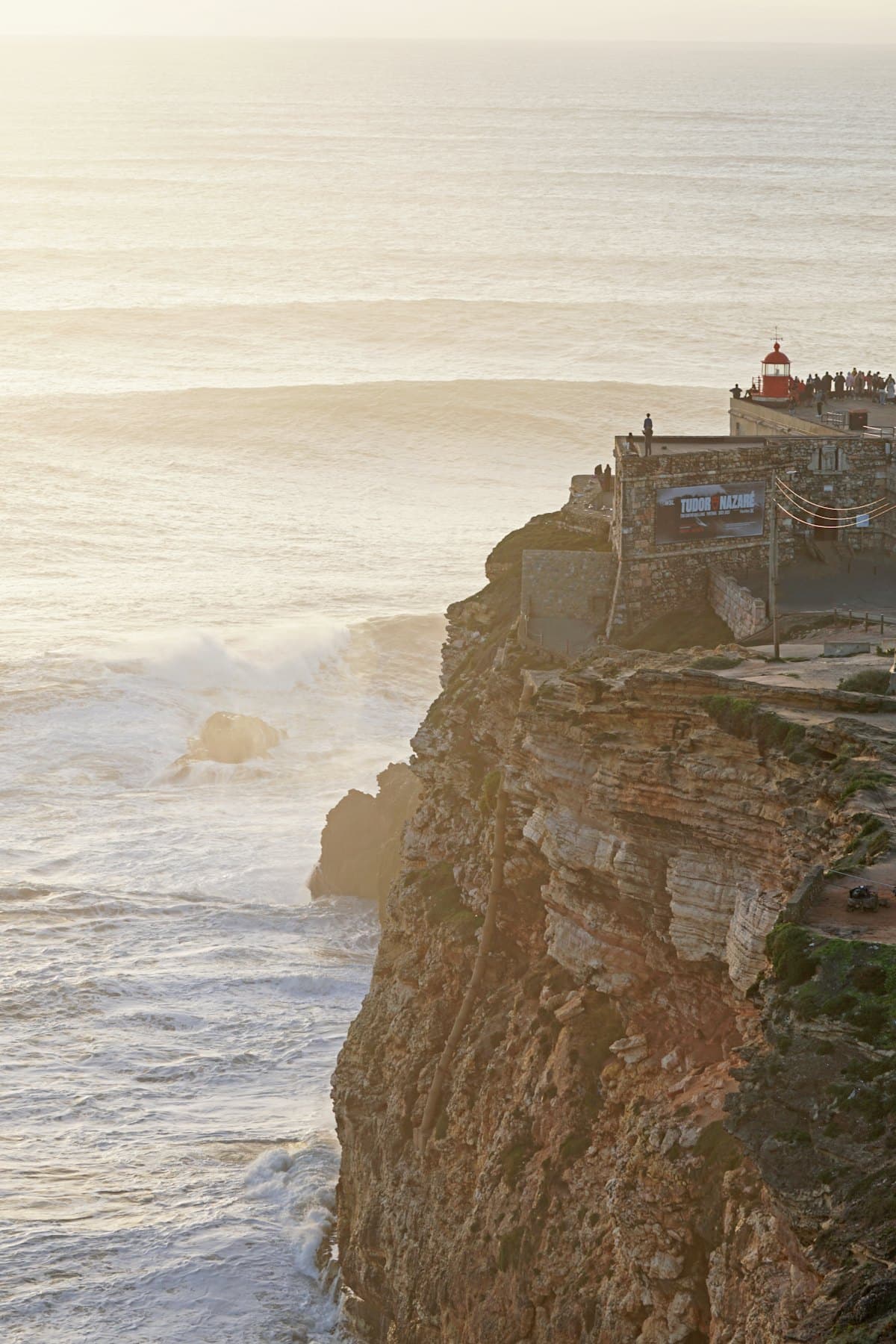
You won't surf Nazaré — almost nobody does — but no Lisbon surf guide is complete without it. Thanks to an underwater canyon that funnels Atlantic swell straight at the headland, Praia do Norte produces the largest waves ever ridden. The current Guinness World Record stands at 26.21 m, set by Sebastian Steudtner in 2020 — and CNN reported a measured 28.57 m ride from 2024 that is still pending ratification. In big-wave season, standing on the cliff by the lighthouse watching mountains of water detonate below is one of the great free spectacles in sport.
Costs, Gear, and When to Go
Surfing near Lisbon is refreshingly affordable, and you don't need to own a single piece of equipment:
- Board rental: Expect €20–30 per day for a decent board, with wetsuits at around €6 per day, per Portugal Surf Rentals.
- Lessons: Group lessons run €35–45 and typically include all gear — the cheapest way to start at Carcavelos or Caparica.
- Wetsuit: The Atlantic here never gets tropical and never gets Arctic. One 4/3 wetsuit works year-round.
- Season: There are waves twelve months a year, but the season peaks from September to May, when consistent Atlantic swells light up the whole coast. Summer is smaller and better for beginners.
- Transport budget: Carcavelos costs about €2 by train, Caparica about €2.60 by ferry and bus. Your surf commute is cheaper than your flat white.
Surf at 8, At Your Desk by 10
This is the real magic of Lisbon for remote workers: the work-surf life here isn't a fantasy, it's a train timetable. Catch the 7-something from Cais do Sodré, surf Carcavelos at 8am, rinse off, and be back at your desk by 10 — whether that desk is in one of the best coworking spaces in Lisbon or in your own apartment.
Just make sure the desk half of the equation holds up its end. Hunching over a laptop with salt still in your hair undoes everything the ocean just did for your back. Monis delivers rental monitors, ergonomic chairs, and height-adjustable desks to apartments across Lisbon — so you can rent your surfboard by the day and your workspace by the month, and own nothing but the lifestyle. See our guide to renting monitors in Lisbon to get set up, and check the best time to visit Lisbon to time your stay with the swell.
Frequently Asked Questions
Yes, easily. Carcavelos is a 20-minute train ride from Cais do Sodré for about €2, Costa da Caparica is a ferry-plus-bus trip for about €2.60, and Ericeira is roughly an hour by bus from Campo Grande. No car needed for any of the main spots.
More Stories

Best Coworking Spaces in Lisbon: Prices, Day Passes & Neighborhoods (2026)

Why Working From a Laptop Is Wrecking Your Neck (And the Fix for Lisbon Nomads)